


Features
Seven things every project gets on day one
They are not plugins. Each one runs inside the same gateway, under the same identity and policy, and each one is a page in the console you already have.
How each one works
Scroll through them. Each is shown as the console page where you use it.
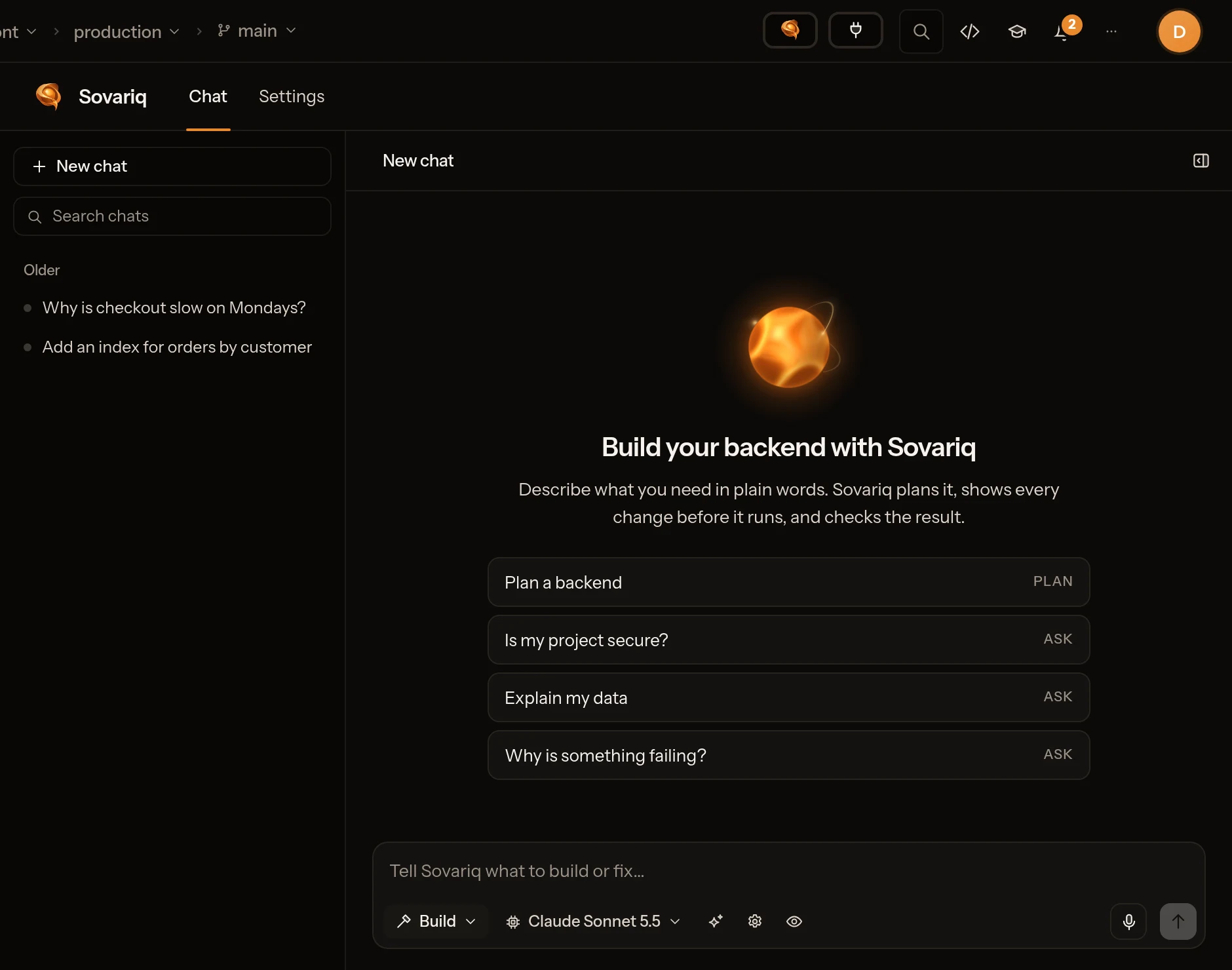
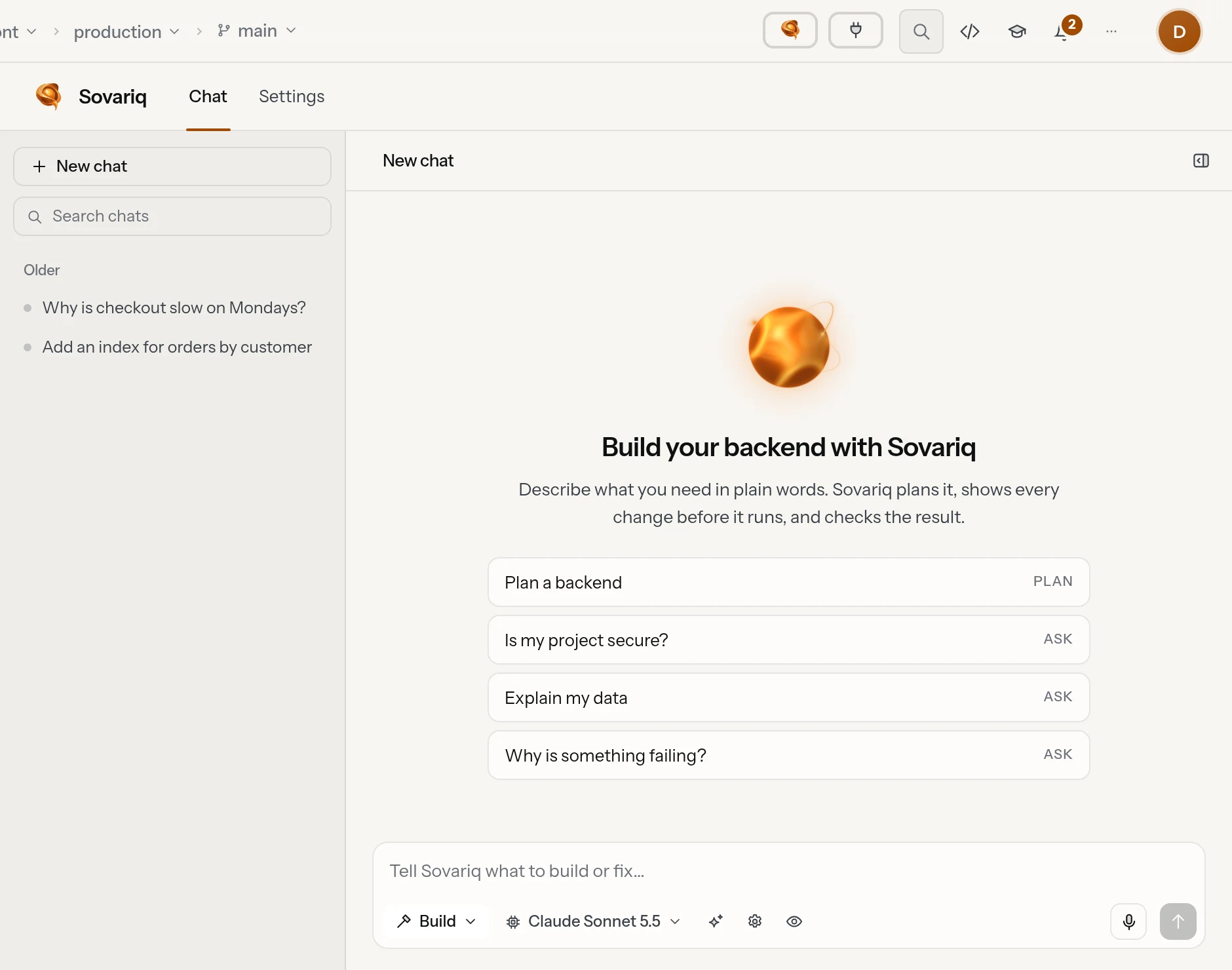
Describe an app and get all of it
Sovariq plans the pages and the data, creates the tables with their row rules, builds a React app on them, tests it in a browser and publishes it to its own address. You approve the plan and watch every step.
- A plan you approve before anything is built
- Tables with row-level security, in your project
- Browser self-test and a safety check before release
- Your own domain, with HTTPS
Nothing runs until it is allowed
Every request is identified by Axis and checked by Guard before any engine sees it. There is no middleware to forget: the check lives in the only path in.
- Multi-org, multi-project identity graph
- SPL policies with default deny
- Postgres row-level security on every table
- Rate limits and quotas per user and per IP
Documents and tables in one project
Use schemaless documents where the shape changes and SQL where it does not. Both live in your project’s own Postgres database, behind the same token and the same policies, with nothing to sync.
- Documents with queries, indexes and live listeners
- Postgres SQL, a REST API and GraphQL
- One identity and policy layer for both
Read your data as it was
Changes to schema, rules and functions are versioned in a timeline you can undo. Turn on history for a table to query it as it was at any moment, and recover a dedicated database to a point in time.
- Table history: sov_as_of() reads a table as it was
- Point-in-time recovery for dedicated databases
- Snapshots of a branch you can go back to
- Undo one change or roll the project back
Try the change before you make it
Check what visitors, signed-in users, each of your app roles and your team can do, and preview a policy or SQL change first. Try one request as any role or a real app user and read every step that decided it. Nothing is written.
- Every decision explained, step by step
- What if: try a rule change before you save it
- Preview SQL changes, rolled back
- Critical findings fail CI
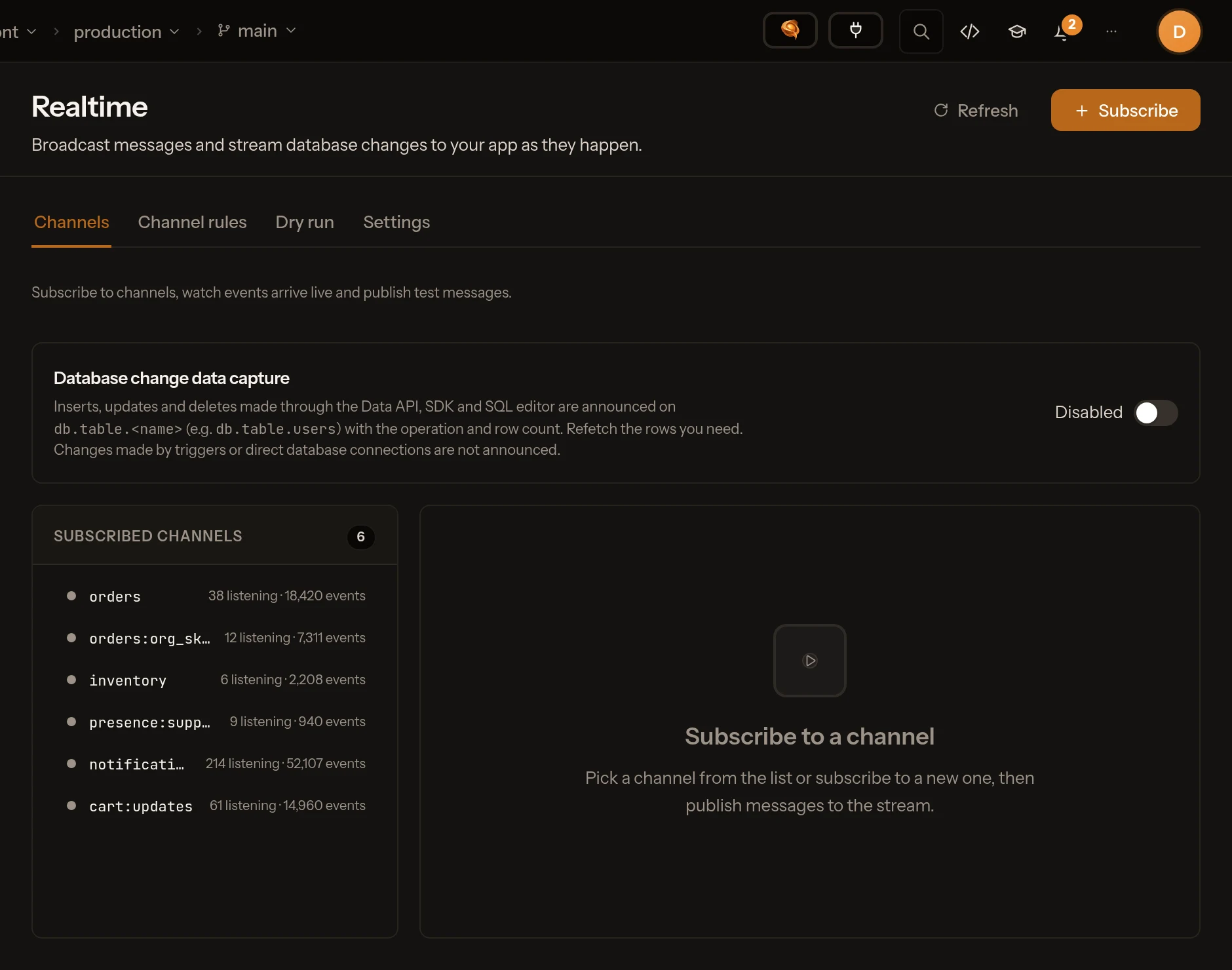
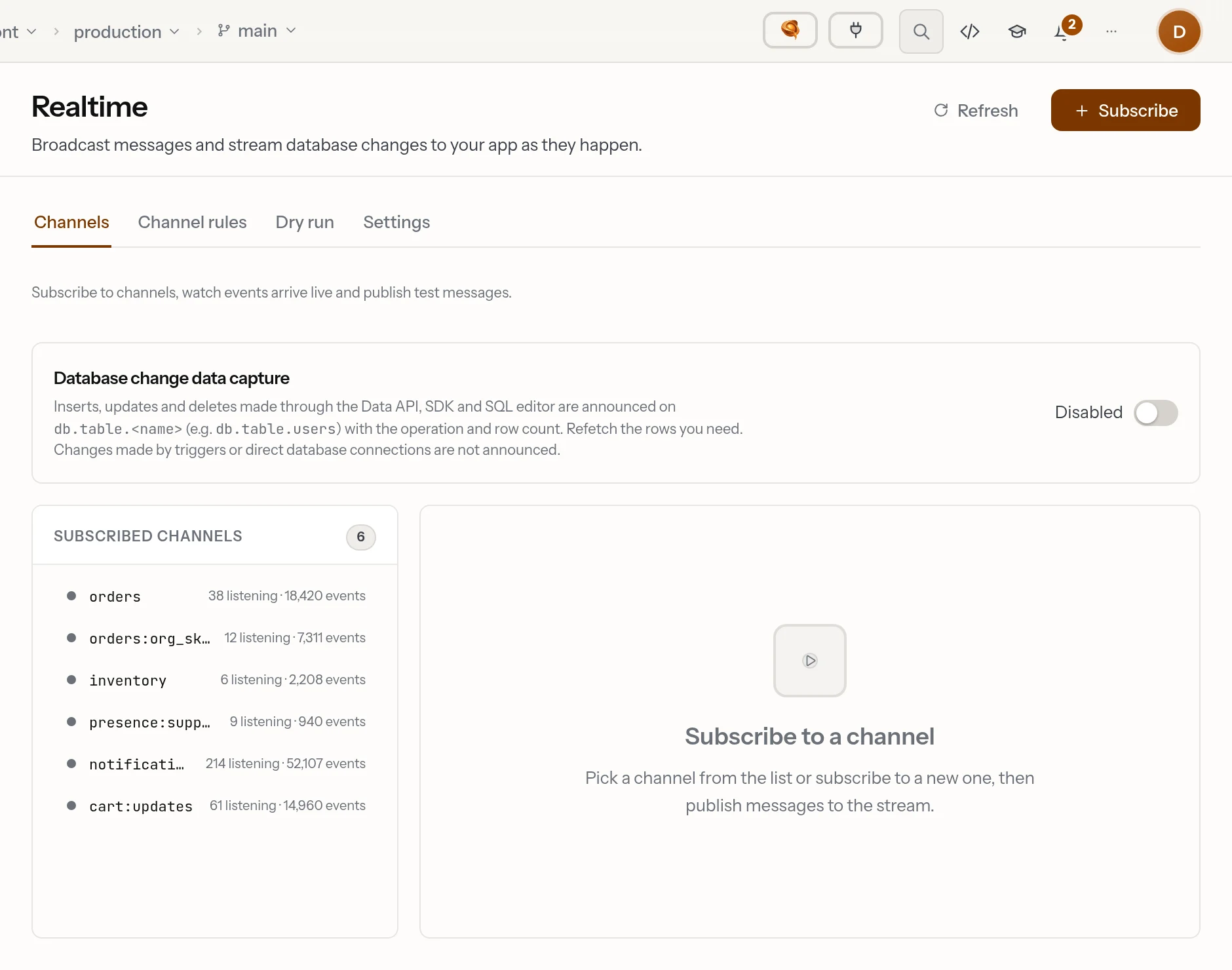
Changes reach every client that is listening
Join a channel and get broadcasts, presence and database changes as they happen. Clients that drop off catch up on missed messages when they come back.
- Broadcast and presence
- Database changes per table
- Replay after a reconnect
- Short-lived WebSocket tickets
Every request leaves a trace
The gateway gives each request a trace id and every engine it touches reports against it. Logs, metrics and traces line up without extra setup.
- Traces across all 12 engines
- Metrics for dashboards
- Structured logs correlated by request
- API, auth and edge logs in the console
Everything in a project, all 33 of them
Plans differ in allowances, and a few features start on a paid plan: the pricing table lists each one. Every card opens the page that explains it.
Data
SQL, documents and vectors in one project, with backups and branches.
Sign-in and access
Who your users are, what they may do, and proof before you ship.
Files, code and realtime
Storage, server code, background work and live updates.
Mobile and growth
What a mobile or web app needs after it ships.
AI
An AI engineer in the console, and AI built into your own app.
Run and move
Logs, audit, teams and the way in from another backend.